








Darjeeling 2 Nights/ Gangtok 2 Nights exploring Tiger Hill, Ghoom Monastery & Batasia Loop,Parmesan Nadia Himalayan Zoological park, Himalayan Mountaineering Institute and much more ..
Darjeeling 2 Nights/ Gangtok 2 Nights exploring Tiger Hill, Ghoom Monastery & Batasia Loop,Parmesan Nadia Himalayan Zoological park, Himalayan Mountaineering Institute and much more ..
DAY 1 : Arrival and Transfer to Darjeeling
Our representative will be there to receive You at New Jalpaiguri Railway Station (NJP) / Bagdogra Airport (IXB) / Tenzing Norgay Bus Stand (Junction) – You will be assisting for the transfer – Darjeeling – Nearly 105 kilometers 3 Ѕ – 4 hours drive – At an height of 2123 meters / 70001 feet lies the land of breathtaking beauty, sloping tea gardens with spectacular views of the Mount Everest is the Queen of the hills – It is also home to the famous World Heritage train – The Darjeeling Himalayan Railway (DHR) – Check into hotel – Evening free to roam around Mall or local Shopping center – Over Night stay at Darjeeling.
DAY 2 : Darjeeling Local Sight Seeing (Half Day)
Early morning at around 3:45 AM drive to 8000 feet / 2440 meters through primitive forests of oak, magnolia to Tiger Hill to view sunrise over Kanchendzonga Peak (subject to clear weather) – On the way back visit Ghoom Monastery, Peace memorial & Batasia Loop – Back to hotel for break fast – After breakfast next round of sight seeing – Half Day city tour includes Padmaja Naidu Zoological Park, Himalayan Mountaineering Institute (Closed on Thursday), Ropeway, Tensing Gumpo Rock, Tibetan Refugee Self Help Center (Closed on Sunday), Tea Estate, Natural History Museum (Sunday Closed), Peace Pagoda – Back to hotel – Evening free to stroll around the Mall area or Chowk Bazaar – Overnight stay at Darjeeling.
DAY 3 : Transfer to Gangtok & Gangtok Local Sight Seeing (Half Day)
Morning breakfast – Transfer to Gangtok – Nearly 135 Kilometers 3 – 3 Ѕ hours drive – Gangtok – The capital of the 22nd State of India, Sikkim is one of the most beautiful hill station with varied options for tourist – It is known for the monastery, Orchids, High altitude Lake and butterflies – It has option for tourist of all ages – Check into Hotel – Drive for visit to Directorate of Handicrafts & Handloom, Research Institute of Tibetology, Do Drul Chorten (Stupa), Enchey Monastery, White Hall, Flower Show, one of the finest monastery where His holy Dalai Lama stayed for some time, etc – Back to hotel – Evening free – Over Night stay at Gangtok.
DAY 4 : Excursion to Tsomgo Lake & Baba Mandir (Full Day)
Morning breakfast at hotel – Excursion to Tsomgo Lake & Baba Mandir nearly 40 kilometers and 2 hours drive along the Kyongnosla Alpine Sanctuary, the home to the red panda and the blood pheasant with Rhododendron and other alpine trees – Situated at an elevation of 3753 meters / 12310 feet – The Lake is oval shaped lake nearly 50 feet deep – Generally covered in snow for most of the year the year – This lake is home to the Brahmini ducks & many migratory birds – Nearby is the sacred Baba Mandir known to be a very holy site for all – Nathu La Pass to Republic of China is nearly 20 kilometers and is optional tour – Back to Gangtok – Evening free to roam around M G Road (Mall) or local Shopping center – Over Night stay at Gangtok.
DAY 5 : Departure – Gangtok to Siliguri
Morning breakfast – After breakfast transfer to Siliguri / New Jalpaiguri Railway Station (NJP) / Bagdogra Airport (IXB) / Tenzing Norgay Bus Stand (Junction) – Nearly 135 kilometers 4 Ѕ – 5 hours drive – Guest are advised to start early and not to rush – Forwarding Journey.
Comfortable Stay for 4 Nights.
Stay is on TWIN SHARING basis in the Preferred Hotel Category.
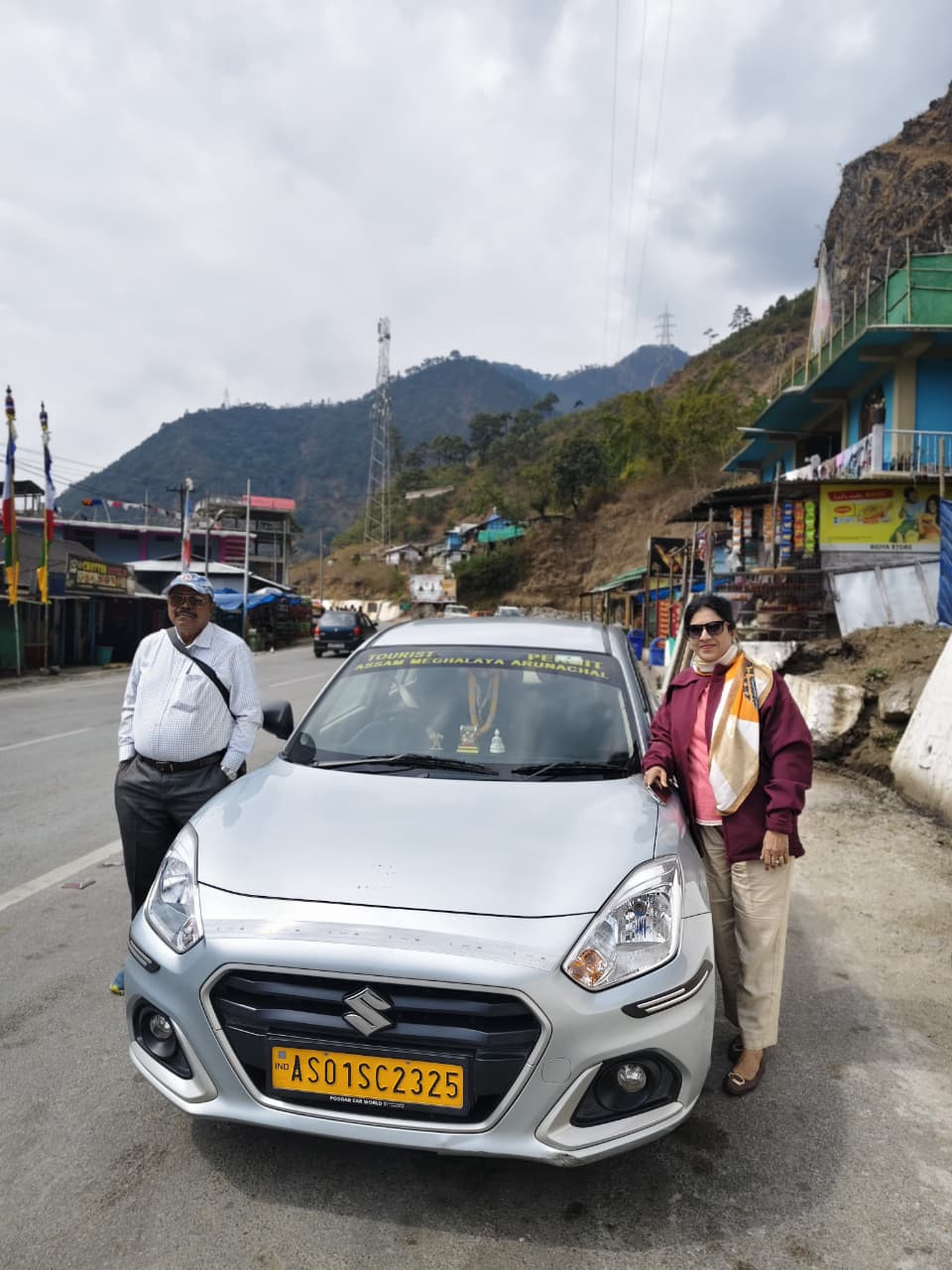
This package includes car
Car is on PRIVATE and no sharing basis
Car will accompany Traveloearth EXPERIENCE Driver throughout the trip.
Assistance on Arrival & Departure.
Is Traveling to the North East Safe?
One of the most frequently asked questions that we get from people who want to visit the region but are apprehensive because of the past of this region (most of it was anyway blown-out news in the media). The short answer to this question is, Yes, traveling to Northeast India is generally very safe, with most of the region’s seven states experiencing a steady decline in political violence and insurgencies over the last decade. Major tourist hubs like Meghalaya, Sikkim, and Arunachal Pradesh are consistently ranked among the friendliest and safest destinations in India, particularly for solo female travelers and families.
What is the best time to visit North East India?
This is yet another question that we come across almost regularly. What we know as the North East of India is a significantly big geographic region. Which means, the north east has a lot to offer and in different seasons, one part of North East India is more gorgeous than another and vice-versa. For example, a trip to Meghalaya during the monsoons is a fantastic way to experience the low – hanging clouds, the greenery and the gorgeous waterfall of the state but at the same time it is not a great time for a trip to Kaziranga National Parks of Assam during this season.
So, in short, there is no single answer to this question.
Seasonal Breakdown
Because the region spans from the Himalayan peaks to low-lying river plains, the weather varies by season:
Winter (October to February): This is the peak tourist season. The weather is pleasant in plains like Assam, while high-altitude areas like Tawang (Arunachal Pradesh) and North Sikkim receive heavy snowfall. Water bodies like the Umngot River in Dawki (Meghalaya) become completely transparent and crystal clear.
Spring/Summer (March to May): A beautiful time to visit as flowers and rhododendrons bloom across Sikkim and Arunachal Pradesh. Temperatures are moderate in the hills, making it a perfect escape from the scorching heat of the rest of India.
Monsoon (June to September): The region experiences some of the heaviest rainfall in the world. While the waterfalls in Meghalaya are at their most spectacular.
I am a vegeterian, will I have any problems in terms of vegeterian food in the North East?
No, you will not face significant problems finding vegetarian food in Northeast India, but your dining experience will require a shift in expectations. While the region is culturally known for its meat consumption, vegetables form an integral part of every native meal. You will find plenty of fresh, organic greens and unique local preparations, though you must plan ahead for strict preferences regarding separate kitchens or specific staples like rotis.
The ease of finding vegetarian food varies notably across the region:
Assam : Abundant North Indian food, roadside dhabas, and traditional vegetarian thalis.
Sikkim : Widespread Buddhist culture ensures plenty of dedicated vegetarian and vegan-friendly cafes.
Meghalaya & Tripura : Tourist hubs like Shillong have excellent pure veg restaurants, but rural routes have fewer choices.
Nagaland, Mizoram, Arunachal, Manipur : Heavily meat-focused. Local vegetarian options are mostly boiled seasonal herbs, shoots, or roots.
Can I travel Solo to North East India?
Yes, you can absolutely travel solo to North East India, and it is widely considered one of the safest and most culturally rewarding regions in the country for independent travellers. A lot of other solo travelers from India and beyond comes here to enjoy the unique beauty, wonderful food and the undisturbed calmness of North East India.
How hot is North East in the Summers?
Depending upon when you are visiting the North East and also depending upon where in the North East are you planning your trip to, the weather can be anything between humid & warm to extremely cold and snowed-out.
Summers in North East India:
If you are planning a trip to North East India, the weather in the plains of Assam will primarily be hot and humid. Places like Majuli, Tezpur, Sibsagar – the historic town will be comparatively cooler, courtesy their proximity to the river.
The higher areas of the North East will be pleasant. And in some cases, even cold.
Places like Shillong, Cherrapunjee & Mawlynnong, and Meghalaya in general will be very plesant, specially in the evenings. Arunachal Pradesh in the summers is very plesant too and is one of the best times to visit Tawang, Dirang, Bomdila etc. for people who are not big fans of cold weather.
The best thing about planning a trip to the North East is the scenery around. Everything is lush – green and fresh. Also a great season to relish some tasty local fruits.
How cold is North East in the Winters?
Winters in the North East are generally cold. From the plains of Assam to the high mountains, everywhere, the mercury dips, completely changing the weather from what it was a few months back.
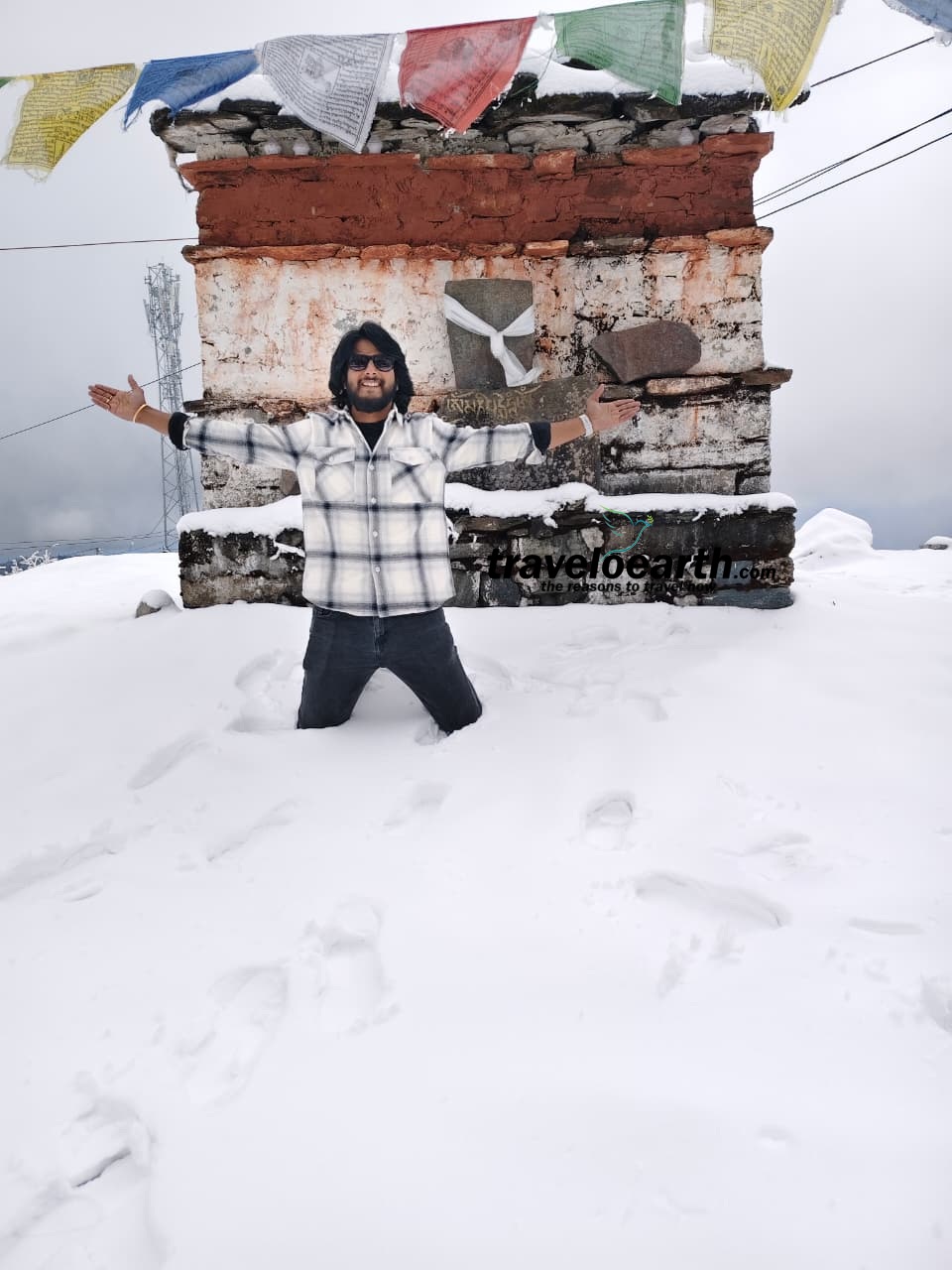
While the plains remain charmingly pleasant to nippy, higher places like Shillong and Cherrapunjee become cold in the winters. Higher areas of Arunachal Pradesh in the winters remain between cold and freezing. Tawang in winters sees snowfall and wears a beautiful coat of fresh white.
If you are somone who likes and enjoys cold weather and places, you will absolutely love Tawang in winters.
Will I get warm rooms and hot water in the Winters?
All our homestays are equipped with room heaters and geysers / immersion rods for hot water. The hosts also provide hot water to the guests from their kitchen, as needed (at places where geysers are not available).
In winters, the stays have room-heaters and to keep you warm in the bed, enough blankets are provided. If you feel you don’t have enough, just let us or your host know. None of the homestays/stays have centralized heating however. Something the region does not really have when it comes to homes or homestays.
Will there be Electricity and Mobile connectivity issues?
While almost all the places we visit as part of our tours, are electrified and has mobile connectivity, on the way, as you drive from one place to another, there might be times where there will be no mobile data or network.
This is nothing to be worried about as, given the terrain and population density and logistical challenges, some areas remain outside the mobile network coverage.
Please also note that, as winters and the monsoons are mostly extreme in the North East, in smaller places like Cherrapunjee, Mawlynnong, Bomdila, Dirang, etc. there can be situations where there might not be electricity and/or mobile network for days, due to sever bad weather (rains, snow, etc.). In such scenarios, your hosts will try to keep you as comfortable as they can, in the given situation by providing electricity through generators, and hot water from the kitchen.
Given the geographical limitations of this otherwise gorgeous region, these thing come with the pros.
As long as you take things with an open mind, as they come, you will have a great time here in the North East.
What is the difference between a Driver-cum-guide, a Dedicated Guide and a Local Guide?
A driver-cum-guide is someone who is familiar of the places to be visited as per your tour plan. He will be responsible for taking you to the attractions and spots that are on the route and the destinations and drop you near them from where you can walk ahead and proceed to explore the attraction while he will wait for you, back at the vehicle. Your driver-cum-guide might or might not give you extensive information about the places you visit.
A dedicated guide is a full-time guide who stays with you throughout the trip, morning to evening. As you move from one place to another while on the tour, he shares with you, various types of information (including stories) regarding the region/place or attraction.
A local guide is someone who will meet you and keep you company for a particular stretch or destination. For example, when you go for the Double decker Living Root bridge trek in Meghalaya, a local guide accompanies you for the trek.
He shares stories, shows you things/places of interest that you come across and helps you with the entire trek in general.
Are there reliable ATMs and banking facilities available throughout the region?
While all bigger towns do have ATMs, smaller and/or remote regions mostly don’t. UPI works at most places but sometimes, if the weather is not conducive and the mobile networks are down, even they might also not work, when in remote places.
Hence, it is always suggested carry enough cash to meet the essentials, if you are coming on a north east India tour that takes you to remote places.
What permits are required for traveling to certain areas in North East India, and how can they be obtained?
There are two types of permits that are needed if you wish to visit most of the states of North East India. For Indian citizens, all the states except for Assam, Meghalaya and Tripura, an Inner Line Permit (ILP) is needed. Different states have different procedures that needs to be followed in order to procure the same.
For non-Indians, a Protected Area Permit (PAP) is needed to visit most of the states of North East India. Some states, such Arunachal Pradesh, also needs a declaration form along with the PAP.
Both the permits however, are procured by us on behalf of our guests so, you don’t have to worry about getting these on your own.